About
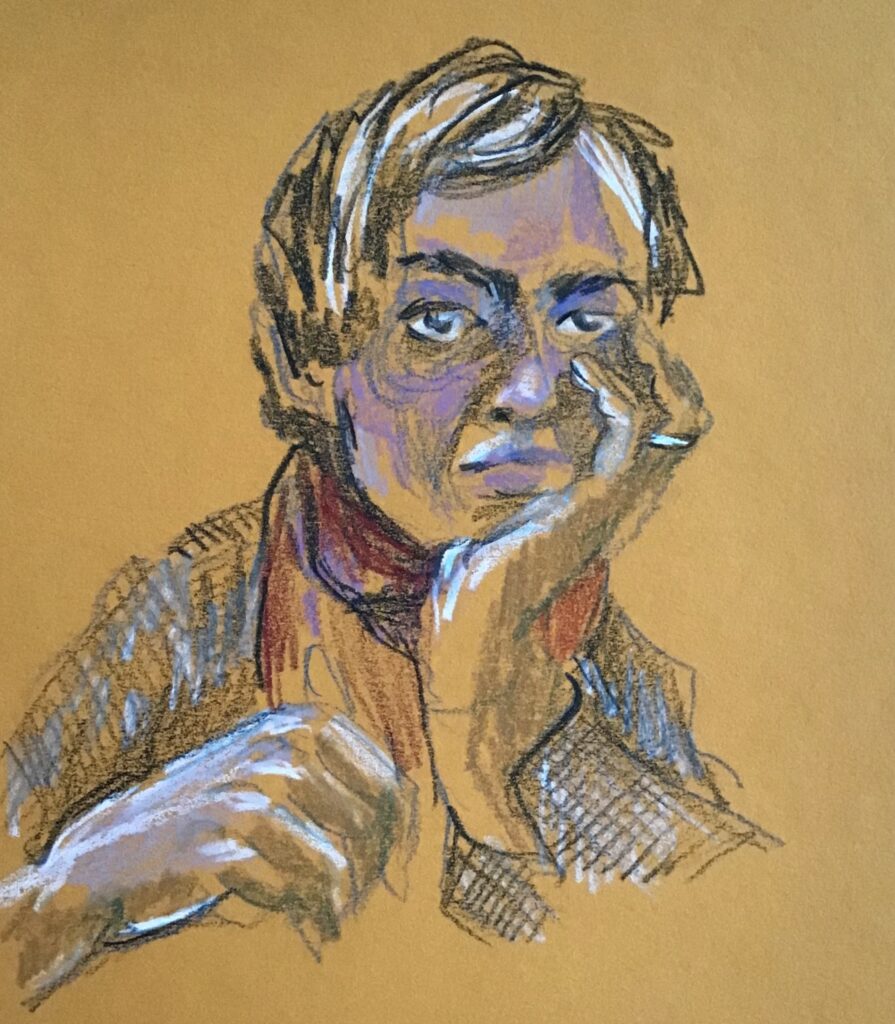
I am an immunologist and have spent most of my adult life in labs: at universities, in big pharma, and in a biotech startup. Each space has its contradictions in values and practice. In academia, the pursuit of scientific truth is coloured by what is cutting-edge, high-impact, and fundable. In industry, drug discovery is fuelled by what is scalable, patentable, and profitable. Creativity shackled by phantom forces with a capital K.
It has become clear to me that without acknowledging the structures we operate within, we will never truly liberate the scientific imagination. Donna Haraway has argued that all knowledge is situated, that there is no view from nowhere, no god trick that lets science see everything from above while remaining invisible itself. Being in the lab gave me an extraordinary appreciation not only for the plurality of our existence and the complexity of our interactions within our bodies and the world beyond, but also a clear-eyed understanding that this situatedness is the condition of all knowledge-making, and that pretending otherwise distorts it. That recognition became a springboard for my entanglements with art. My work is an ongoing dialogue between science and art, each challenging the other to create what David Graeber called poetic technologies, what a truly liberated imagination might bring into being.
One example of this intersection is my artwork EKseq, in which I created a DNA sequence from drawings of my son’s body, overcoming the distance we place between the living human and the genetic codes we engineer. In the performance Extraction, I extracted my own DNA at a bench, carrying posters about bodies, desirability, and the eugenic logic that quietly moves through our everyday. My work brings back what Mary Oliver called the body’s soft animal, stripping away the sterility of scientific practice, making it more graspable while restoring some of its living mystery.
Contact
You can reach me via mail koshika.yadava@gmail.com